Within the Green Booster project, an advanced training on green transition and decarbonisation was held
By: admin
10 Oct
0
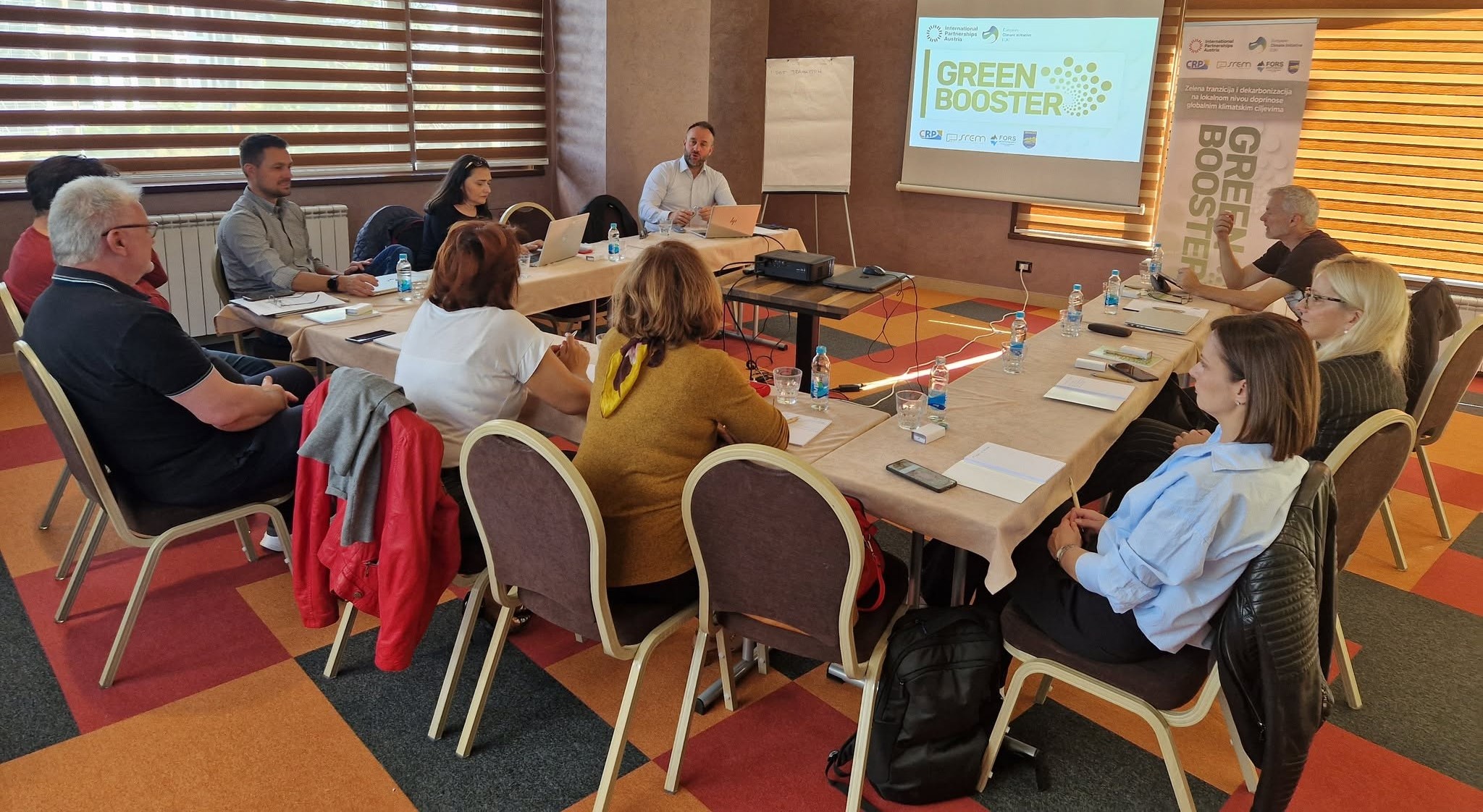
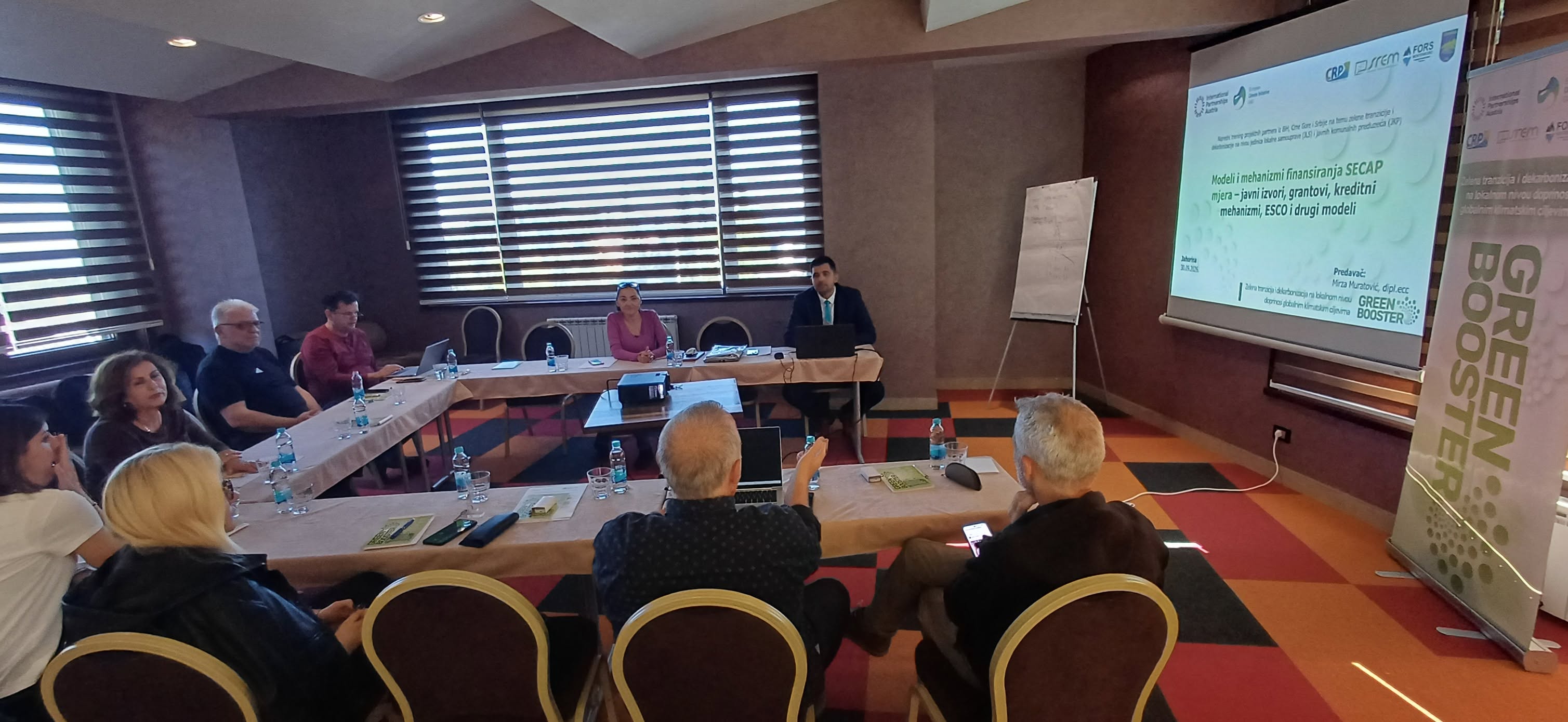
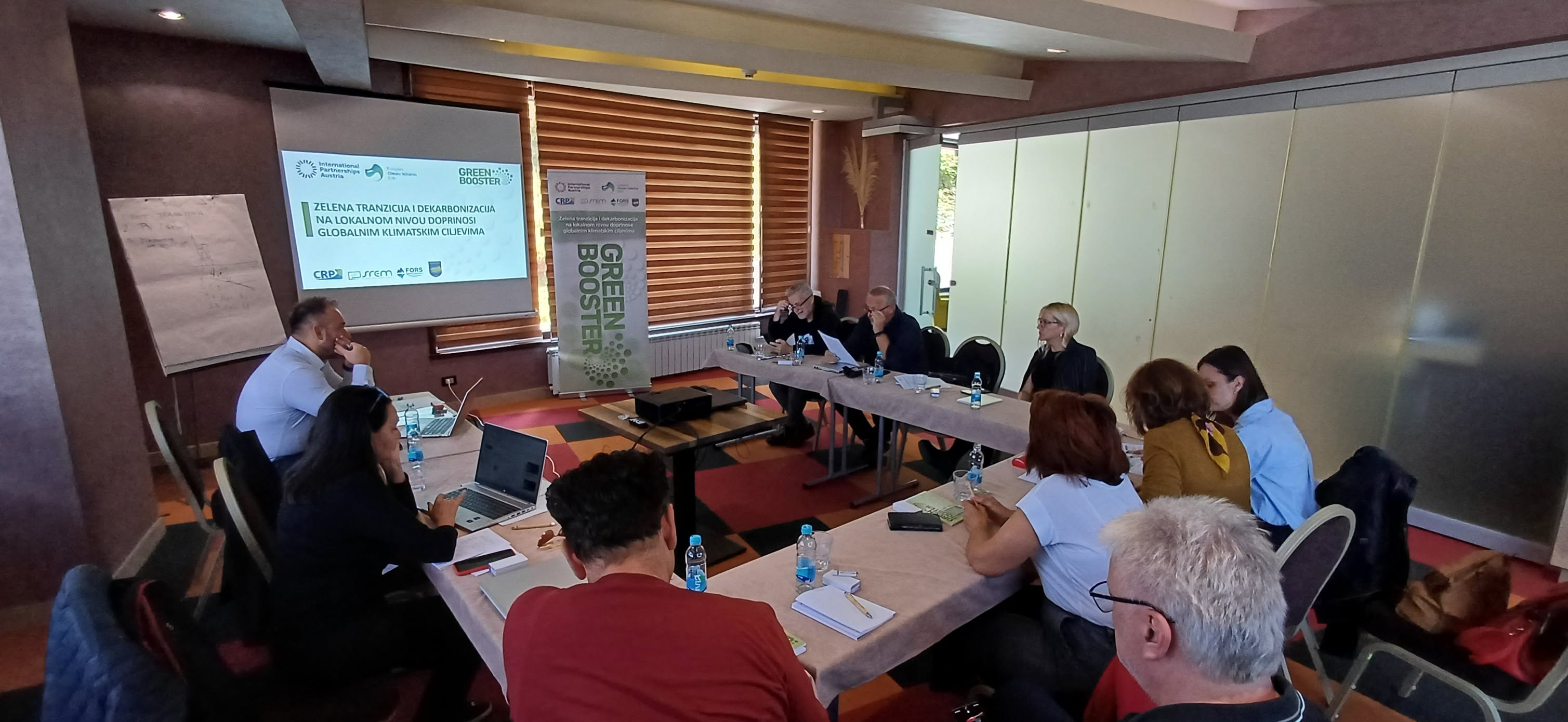
On 29 and 30 September 2026, a two-day advanced training on green transition and decarbonisation at the level of local self-government units and public utility companies was held on Jahorina, within the Green Booster. The training brought together representatives of project partners from Montenegro, Bosnia and Herzegovina and Serbia.
During the first day of the training, topics covered included the strategic and regulatory framework for local energy and climate transition, the role of renewable energy sources and energy efficiency in local decarbonisation, SECAP[1] as an instrument of local green transition, as well as measures for climate change mitigation and adaptation to its impacts at the local level.
The second day was dedicated to models and mechanisms for financing SECAP measures, including public funding sources, grants, credit mechanisms and ESCO models, as well as examples of good practice from European Union countries in the field of local decarbonisation, the implementation of energy efficiency measures and the use of renewable energy sources.
As part of the practical segment of the training, participants worked on identifying possible funding sources, key stakeholders and the expected effects of a selected energy efficiency improvement measure. Through lectures, group work and discussion, possibilities for adapting relevant European experiences to local conditions in Montenegro, Bosnia and Herzegovina and Serbia were also considered.
The trainers were Nihad Harbaš and Mirza Muratović.
The Green Booster project is implemented by FORS Montenegro in partnership with the Centre for Development and Support – CRP from Bosnia and Herzegovina as the Lead Partner, the Srem Regional Development Agency from Serbia and the City of Živinice from Bosnia and Herzegovina.
The project is funded by the Austrian Development Agency (ADA) within the International Partnerships Austria programme and the European Climate Initiative (EUKI). The Austrian Development Agency is Austria’s federal agency responsible for development cooperation and humanitarian aid. EUKI is a project financing instrument of the German Federal Ministry for the Environment, Climate Action, Nature Conservation and Nuclear Safety (BMUKN), while the EUKI call for project ideas is implemented by Deutsche Gesellschaft für Internationale Zusammenarbeit (GIZ) GmbH. EUKI’s main objective is to strengthen climate cooperation within the European Union (EU) in order to reduce greenhouse gas emissions.
[1]Sustainable Energy and Climate Action Plan


